






EHS Advisory Package

Environmental due diligence (EDD)

Vietnam GHG Regulatory Consulting

Chemical Management Consulting

Environmental - OHS Compliance Audit
Service Information
In the context of increasingly stringent international commitments and domestic regulations on climate change, the demand for transparency in greenhouse gas (GHG) information has become essential for businesses. Through comprehensive consulting services, ENVIAPAC accompanies enterprises in complying with Vietnamese legal requirements and meeting market expectations; while also optimizing production processes, reducing environmental impacts, and moving toward a lower carbon footprint—thereby contributing to climate change mitigation and promoting sustainable development.


Service Details
1 . GHG inventory and Emission reduction
The service supports enterprises to conduct GHG inventory and emission reduction.
Demand | Output of service |
(According to Decree No. 06/2022/ND-CP regulating GHG emission reduction and ozone layer protection; Decree No. 119/2025/ND-CP amending and supplementing Decree 06/2022/ND-CP; Decision 13/2024/QD-TTg promulgating the list of sectors and facilities emitting GHGs that must conduct GHG inventories)
(According to Circular No. 96/2020/TT-BTC on information disclosure in the securities market)
|
|
Implementation approach
GHG inventory

GHG emission reduction

2 . CBAM declaration
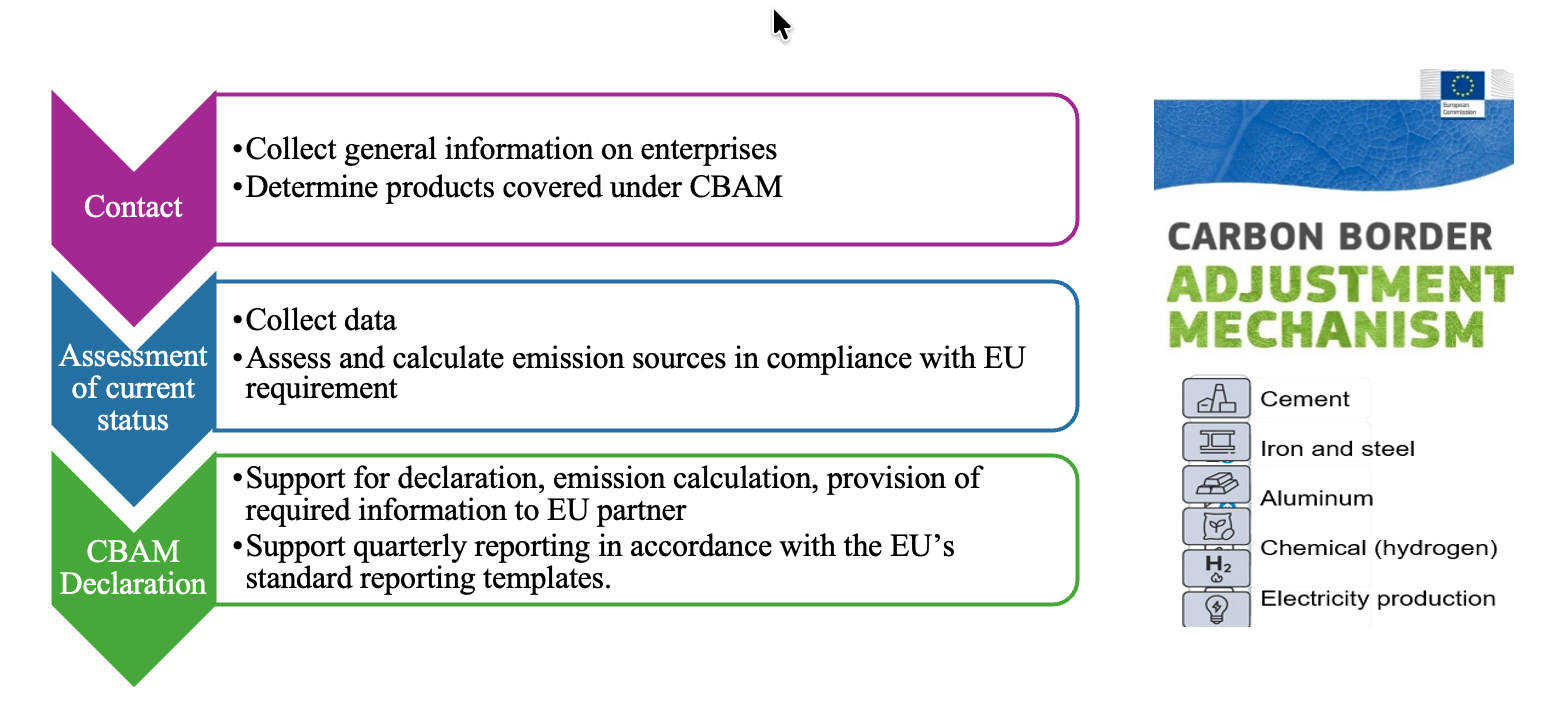
The Carbon Border Adjustment Mechanism (CBAM) is an environmental policy tool designed to support the European Union's (EU) climate ambitions, aiming to reduce GHG emissions by at least 55% by 2030 and achieve climate neutrality by 2050 at the latest. CBAM is the EU's tool for imposing a carbon price on goods imported into the EU.
By regulation, importers must declare CBAMs and submit CBAM certificates corresponding to the integrated emissions in their goods. In the initial phase, CBAMs focus on product groups with the highest carbon leak risk, including: cement, electricity, iron and steel, aluminum, fertilizers, and hydrogen. ENVIAPAC provides business consulting support in CBAM declarations as requested by importers.
Implementation approach
3 . Energy attribute certificates (EAC)
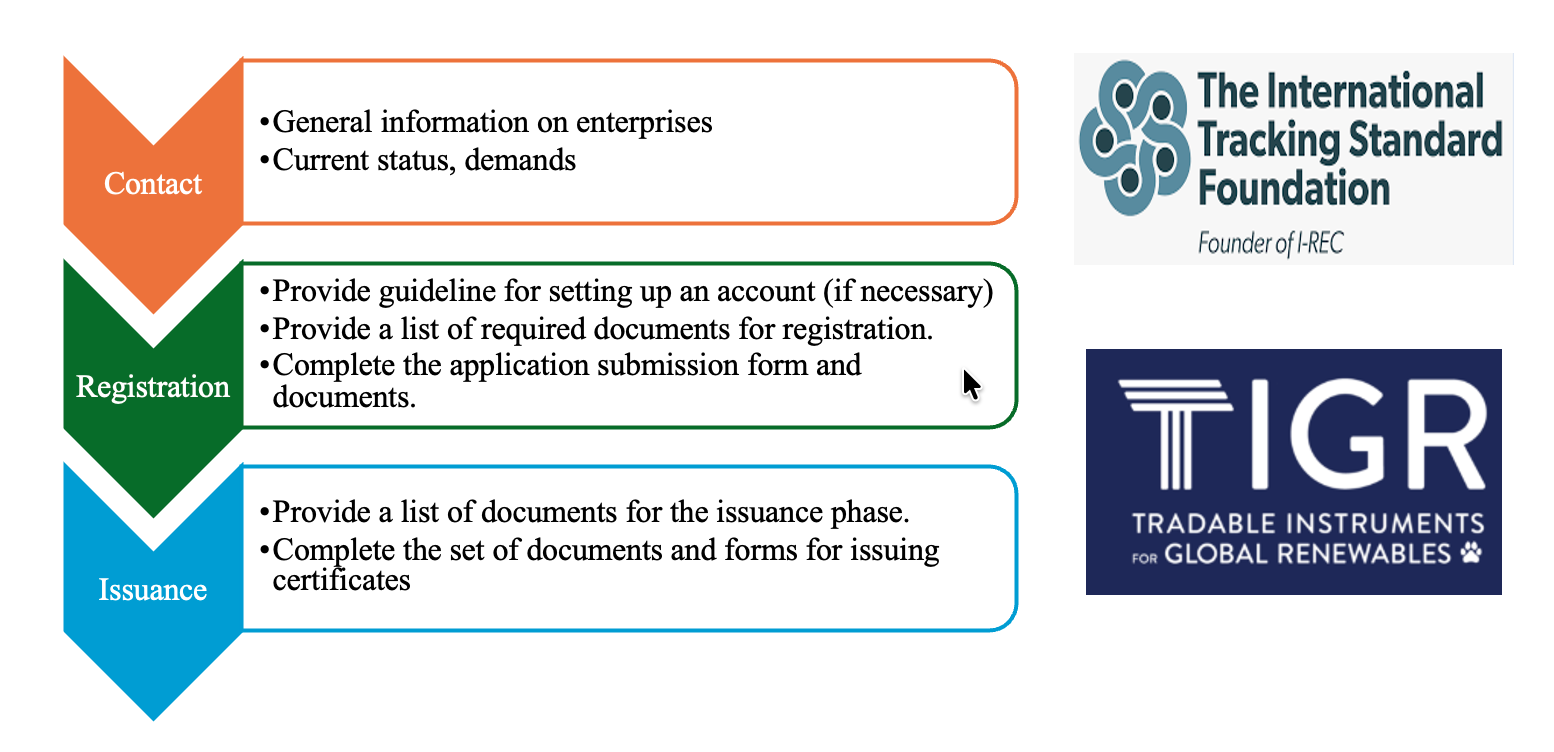
Energy Attribute Certificates (EACs) are tools that record information (attributes) about an energy unit, such as the energy-generating resource, the installation of the power generation facility, and the operating time. EACs help transfer the "right to use the green attributes" of renewable energy, enabling businesses to claim to use renewable electricity by purchasing EACs without directly purchasing electricity from power plants.
1 REC or 1 TIGR represents 1 megawatt-hour (MWh) of energy generated from renewable energy sources (solar, wind, hydropower, biomass, etc.).

Figure 1. Potential project types for EAC development
ENVIAPAC supports renewable energy producers in registering and issuing renewable energy certificates such as RECs (Renewable Energy Certificates) and TIGRs (Tradable Instrument for Global Renewables) for exchange and trading to generate additional revenue for businesses.
Implementation approach
4 . Carbon credits
Carbon credits are a tradable instrument representing the amount of GHG emissions avoided or removed from the atmosphere. Credits are generated from activities that reduce emissions or increase carbon sequestration, often in the form of projects such as renewable energy projects; electric vehicle charging stations; carbon capture and storage; biogas recovery; methane avoidance through aerobic wastewater treatment or solid waste composting; incineration of municipal solid waste for electricity generation; or extending forest life, reducing emissions from deforestation and forest degradation, etc.
Carbon credits are certified by governments (e.g., Section 6.4 Mechanism, Section 6.2 Mechanism, etc.) or independent organizations through carbon credit standards such as the Gold Standard (GS), Verified Carbon Standard (VCS), Global Carbon Council (GCC) standards, etc.
Typically, 1 carbon credit represents 1 ton of CO2 equivalent (CO₂e) avoided or removed.

Figure 2. Figure 1. Potential project types for carbon credit development
We advise businesses throughout the entire carbon credit project development lifecycle, from assessing the potential for carbon credit projects; developing project documents (PDs); consulting with stakeholders (if required); evaluating and registering projects under standards; developing emission reduction monitoring and measurement plans; and verifying and implementing carbon credits.
Implementation approach